For decades, the standard approach to managing rainwater in the UK was relatively simple: catch it in a gutter, drop it into a pipe, and whisk it away as quickly as possible to the nearest river or sewer. It was an ‘out of sight, out of mind’ philosophy that worked well enough when our towns were smaller and the climate was more predictable. However, as our urban landscapes have become increasingly paved over and extreme weather events have become more frequent, this traditional method is reaching its breaking point. The rapid runoff from hard surfaces often overwhelms old Victorian sewers, leading to flash flooding and the pollution of our natural waterways.
This is where the concept of sustainable drainage comes into play. It represents a fundamental shift in how we view water in the built environment. Instead of treating rainwater as a waste product to be disposed of, modern approaches look to manage it as a valuable resource. By mimicking natural processes, we can slow the flow of water, filter out pollutants, and create spaces that benefit both people and wildlife. This holistic approach is at the heart of effective drainage strategies, ensuring that new developments are resilient to the challenges of the twenty-first century.
Understanding the four pillars of sustainable drainage
To truly appreciate the value of a well-considered drainage strategy, it helps to understand the four core principles that guide it. These pillars ensure that the system provides more than just a functional way to move water; they ensure it adds genuine value to the local environment and the community. When these four elements are balanced correctly, the result is a landscape that feels integrated and purposeful.
- Water Quantity: This is the most immediate concern. The goal is to control the volume and frequency of runoff to minimise the risk of flooding both on-site and downstream. By storing water and releasing it slowly, we can protect vulnerable areas.
- Water Quality: Rainwater picking up oils, heavy metals, and debris from roads and car parks can be toxic to aquatic life. Sustainable systems use natural filtration through soil and vegetation to clean the water before it reaches the groundwater or rivers.
- Amenity: Drainage shouldn’t just be functional; it should be beautiful. Well-designed features like ponds or rain gardens create pleasant public spaces where people can relax and socialise, enhancing the overall quality of a development.
- Biodiversity: By introducing water and varied plant life into urban areas, we create essential habitats for birds, insects, and amphibians. This helps to reverse the trend of nature being pushed out of our cities.
Why early integration of SuDS Design is a game changer
One of the most common mistakes in property development is leaving the drainage strategy as an afterthought. When drainage is considered only after the buildings, roads, and car parks have been laid out, the options become severely limited. This often leads to expensive, engineered solutions like massive underground concrete tanks that provide no benefit to biodiversity or amenity. They are hidden costs that take up space without adding any aesthetic or environmental value.
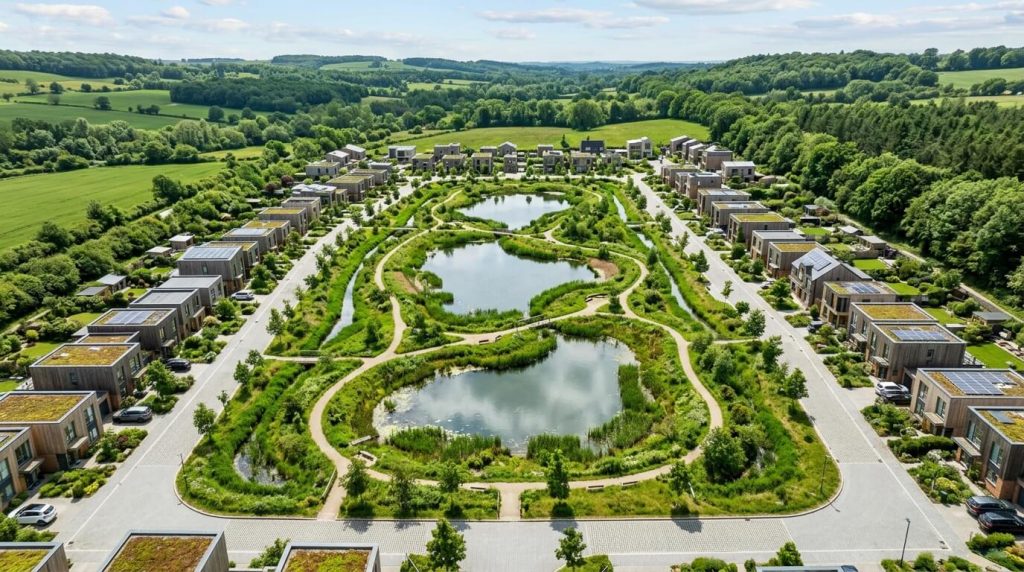
Integrating SuDS Design at the very beginning of the master-planning process allows the landscape to work with the water, rather than against it. By looking at the natural topography of the site, designers can identify where water naturally wants to flow and pool. This allows for the creation of ‘blue-green corridors’ that double as walking paths or parkland. Not only does this often reduce the overall cost of the infrastructure, but it also makes the planning approval process much smoother, as local authorities are increasingly prioritising sustainable, surface-based drainage solutions over traditional piped systems.
Common techniques used in modern systems
There is a wide variety of tools available to designers, ranging from high-tech permeable materials to simple nature-based solutions. The choice depends heavily on the specific site conditions, such as the soil type and the available space. Some of the most effective components include:
- Permeable Paving: This allows water to soak through the surface of driveways and car parks into a stone sub-base below, where it is stored and cleaned.
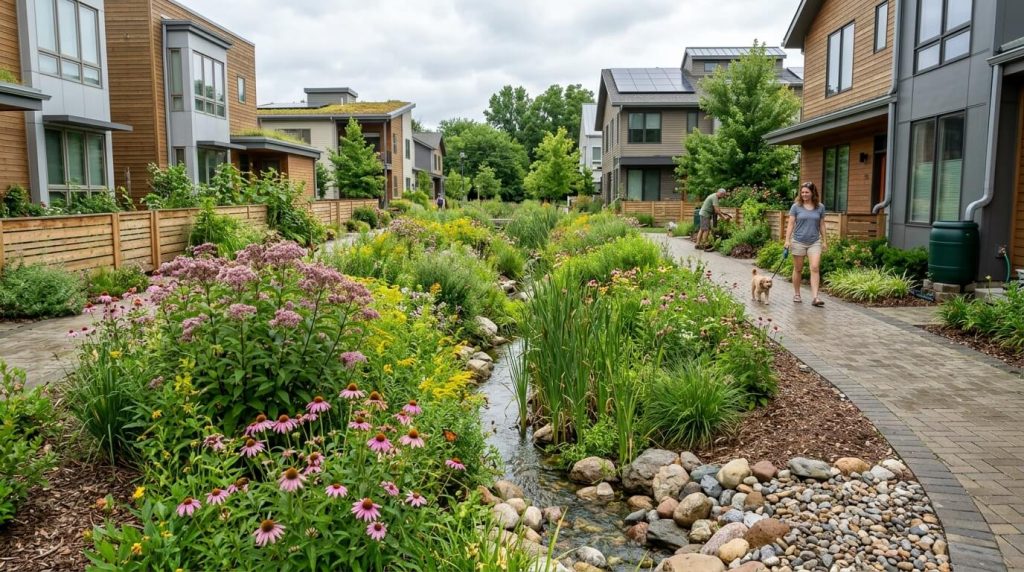
- Swales: These are shallow, vegetated channels that transport water across a site, slowing it down and allowing some of it to soak into the ground.
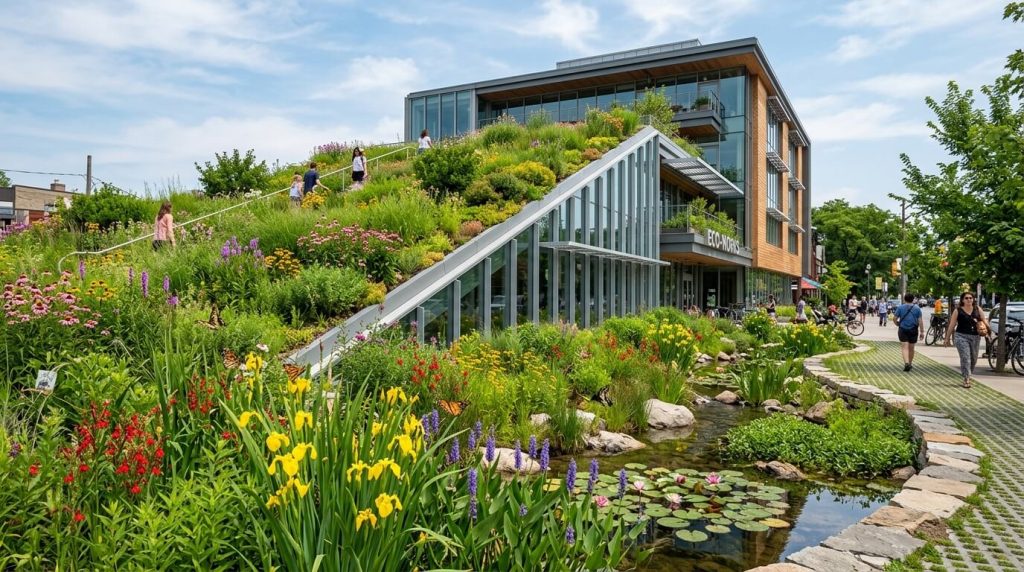
- Green Roofs: By covering a roof with vegetation, a significant amount of rainfall can be absorbed by the plants or evaporated back into the atmosphere, reducing the initial surge of water.
- Detention Basins: These are dry areas that are designed to hold water only during heavy storms, acting as a temporary reservoir to prevent downstream flooding.
- Rain Gardens: Small, planted depressions that capture runoff from roofs or small paved areas, providing a beautiful focal point for a garden or street.
Navigating the technical challenges of modern drainage
While the benefits of sustainable drainage are clear, the implementation isn’t always straightforward. Every site presents its own unique set of challenges. For instance, in areas with heavy clay soil, infiltration (where water soaks into the ground) might be impossible. In these cases, the system must focus on attenuation—storing the water and releasing it at a controlled rate into the sewer or a nearby watercourse. This requires careful calculation and a deep understanding of hydraulic modelling to ensure the system doesn’t fail during a once-in-a-hundred-year storm event.
Topography also plays a massive role. On a very flat site, getting water to move through a swale without it becoming stagnant can be tricky. Conversely, on a very steep site, the water might move too quickly, causing erosion and bypassing the filtration layers. Designers must use a combination of check dams, tiered basins, and clever landscaping to manage the energy of the water. Furthermore, there is the long-term consideration of maintenance. A system that is overgrown with weeds or blocked by silt will eventually fail, so the design must include clear access points and a realistic management plan that the property owner can follow.
The role of professional expertise in achieving compliance
As the regulatory landscape in the UK continues to evolve, the requirements for sustainable drainage are becoming stricter. In many parts of the country, it is now a mandatory requirement for almost all new developments to demonstrate how they will manage surface water sustainably. This isn’t just about ticking a box for the planning department; it’s about ensuring the long-term viability and safety of the built environment. Navigating the Lead Local Flood Authority (LLFA) requirements can be a complex task, involving detailed reports, soakaway tests, and intricate drawings.
Working with specialists who understand the nuances of these regulations is essential. They can provide the necessary technical evidence to prove that a proposed system will work as intended, even under the pressure of climate change and increased rainfall intensity. By focusing on site-specific data and using advanced software to simulate various storm scenarios, professionals can create a drainage strategy that is both robust and cost-effective. This level of detail protects the developer from future liabilities and ensures that the finished project is a positive addition to the local neighbourhood.
Future-proofing our communities through better water management
Ultimately, the move towards more sustainable drainage is a reflection of a wider understanding that our infrastructure must be more adaptable. As we face a future with more frequent heatwaves and more intense downpours, the way we manage the interface between the sky and the ground becomes critical. A well-designed system doesn’t just manage a flood; it helps to cool our cities during the summer through evapotranspiration and provides a much-needed connection to nature for urban residents.
The transition from ‘grey’ infrastructure (pipes and concrete) to ‘green’ and ‘blue’ infrastructure is a journey toward more resilient communities. It requires a change in mindset from everyone involved in the construction industry—from architects and engineers to developers and planners. By embracing these natural processes and prioritising the health of our water systems, we are building environments that are not only safer and more sustainable but also significantly more enjoyable places to live and work. The rain will always fall, but how we choose to welcome it onto our land will define the success of our future developments.

Rose Woofter writes about sustainable luxury and the growing trend of eco-friendly, yet lavish, travel experiences, with a focus on heritage railway carriages.